
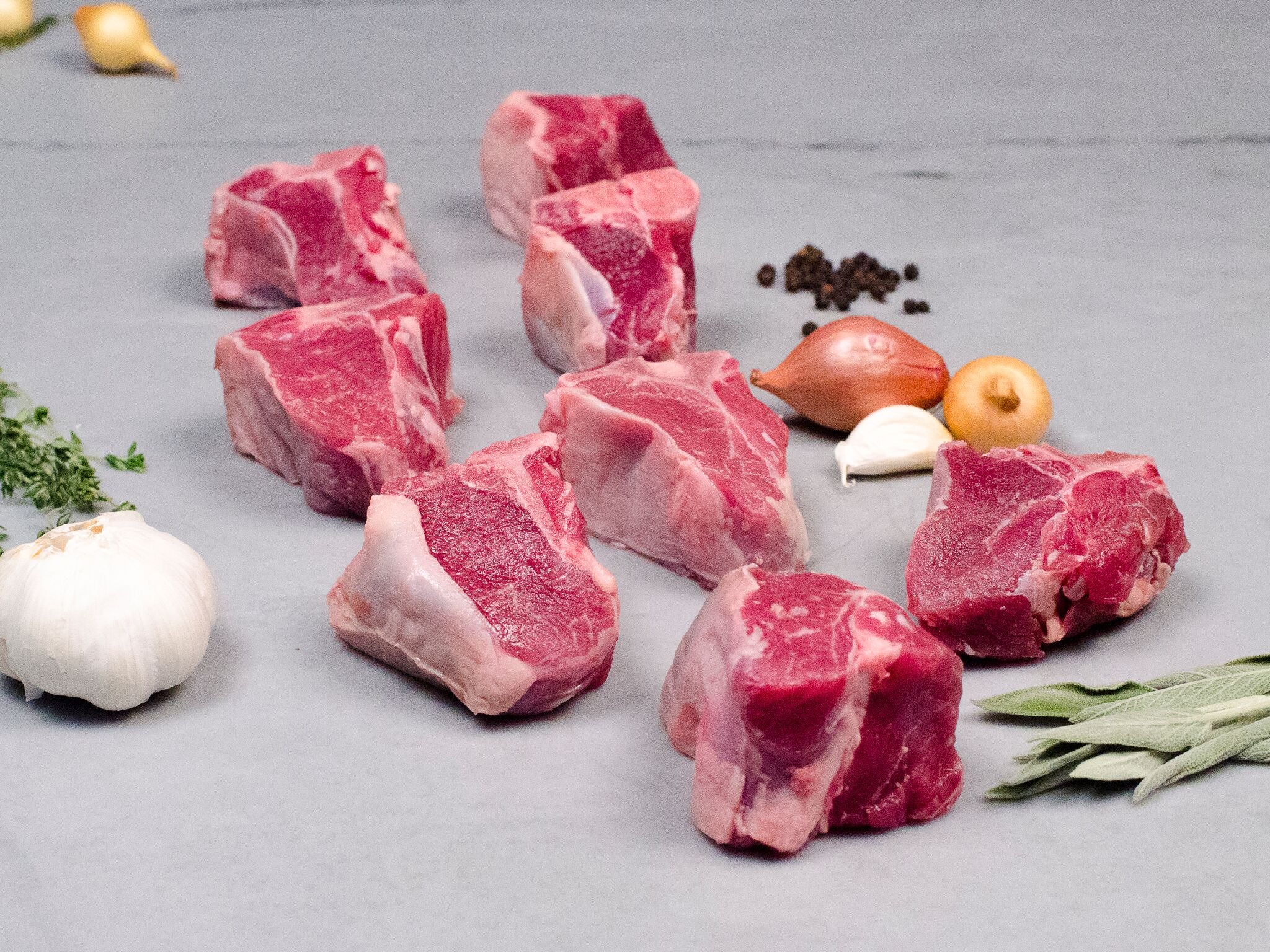
Four 6-8 oz chops, bone-in — the most succulent cut! — Shannon Creek Farm
Goat Loin Chops
Four 6-8 oz chops
Shannon Creek Farm
Goatober is 16 years old! October is the natural season for goat, and we are proud to bring in nose-to-tail goat every October as part of our effort to celebrate delicious, lean, and woodsy goat meat.
Anne Saxelby was America’s first all domestic cheesemonger. Her lovely shop connected the New York City public to rural communities and dairies where she learned about a predicament for goat cheese makers — since females are the milk producers there is hardly any need for males. Thus, Anne conceived Goatober and wove a virtuous web of farmers and chefs to make it happen – a seasonal celebration of goat meat from male goats who spent happy lives foraging in the woods! Sixteen years later the project continues thanks to the rolling hilly pastures of Shannon Creek Farm in the Flint Hills of Kansas. Shop goat in its natural season — goats are traditionally born in the Spring and ready for harvest in October! Every nose-to-tail cut is juicy, earthy, clean, nourishing and fulfilling.
Goat chops are a pure treat, and so easy to prepare: just rub the meat with salt and pepper and perhaps a bit of fresh rosemary. The chop is the most decadent, tender, succulent, rarified, and esteemed cut. Each goat only yields a few of these special chops.
Although leaner than beef or lamb, goat meat is rich and flavorful and boasts light floral notes in every bite. Because goat meat has less fat, it lends itself to slow and low cooking including braises and barbecue — see our Cooking Tab for more information!
Since 2010 Goatober has grown to become a celebration of all things goat, the most widely consumed protein on the planet!
How to Prepare
1. Take the meat out of the refrigerator an hour prior to cooking.
2. Season liberally with salt and pepper on all sides.
3. Preheat a heavy bottomed pan over medium-high heat until just about smoking.
4. Add a tablespoon of oil to the pan and sear the chop for 3-5 minutes depending on its size. For larger chops, add a few knobs of butter to the pan along with a clove of garlic and 2-3 sprigs of thyme or rosemary. Baste the chops using a spoon for the final 3-5 minutes of cooking.
5. Cook until your desired internal temperature is reached. (120-125℉ for rare, 130-135℉ for medium-rare)
6. Let rest for 3-5 minutes before carving.
© 2026, Heritage Foods Powered by Shopify