
Bone-in — a lighter and leaner alternative — Shannon Creek Farm
Goat Ribs with Belly
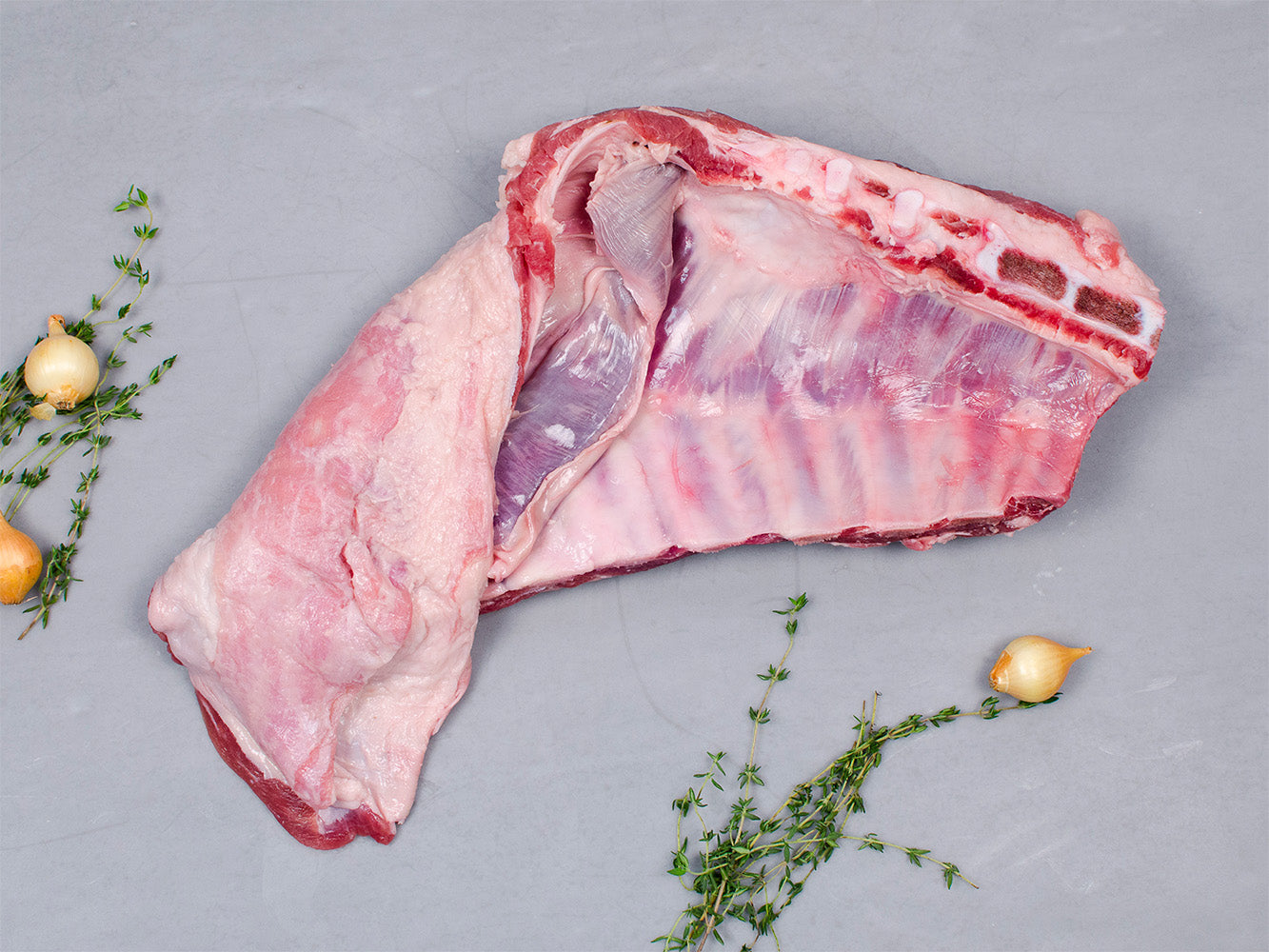
One bone-in belly with ribs attached
Shannon Creek Farm, Kansas Flint Hills
Choose your preferred size from the drop down menu above.
Goatober is 16 years old! October is the natural season for goat, and we are proud to bring in nose-to-tail goat every October as part of our effort to celebrate delicious, lean, and woodsy goat meat.
Anne Saxelby was America’s first all domestic cheesemonger. Her lovely shop connected the New York City public to rural communities and dairies where she learned about a predicament for goat cheese makers — since females are the milk producers there is hardly any need for males. Thus, Anne conceived Goatober and wove a virtuous web of farmers and chefs to make it happen – a seasonal celebration of goat meat from male goats who spent happy lives foraging in the woods! Sixteen years later the project continues thanks to the rolling hilly pastures of Shannon Creek Farm in the Flint Hills of Kansas. Shop goat in its natural season — goats are traditionally born in the Spring and ready for harvest in October! Every nose-to-tail cut is juicy, earthy, clean, nourishing and fulfilling.
Truly one of the most luscious cuts, the bone-in belly is a full-flavored experience, moist, and boasting layers of silky fat. We think they are best prepared low and slow on the grill, for a genuinely sensational barbecue treat or roasted in the oven.
Although leaner than beef or lamb, goat meat is rich and flavorful and boasts light floral notes in every bite. Because goat meat has less fat, it lends itself to slow and low cooking including braises and barbecue — see our Cooking Tab for more information!
Since 2010 Goatober has grown to become a celebration of all things goat, the most widely consumed protein on the planet!
Goat cuts ideal for slow and low cooking like braises and barbecue include leg, shoulder, ribs, and shanks, and goat chops and rack can be seared in a pan.
How to Prepare
Braise:
1. Take the roast out of the refrigerator an hour prior to cooking.
2. Preheat your oven to 300℉.
3. Season liberally with salt and pepper on all sides.
4. Preheat a dutch oven with lid over medium-high heat and sear meat in neutral oil on all sides until brown. Drain some fat, remove the meat, and set aside.
5. In the same dutch oven, cook at medium heat about a cup of diced onions, ½ cup of celery, and ½ cup of diced carrots, until the onions are translucent. Add two tablespoons of tomato paste and cook for 2 minutes. Add one cup of wine or broth to deglaze the pan and cook until the wine has reduced by half.
6. Return the meat to the pan. Add enough boiling stock or water to cover the meat just slightly more than halfway. Add a bundle of herbs such as rosemary, thyme, and bay leaves tied with butcher’s twine to the dutch oven. Cover and place in a preheated 300℉ oven for approximately 30-40 minutes per pound of meat or until tender.
BBQ:
1. Take the roast out of the refrigerator an hour prior to cooking and bring a smoker up to 225 degrees.
2. Pat the meat dry and season liberally with salt and pepper.
3. Place in the smoker for 4-6 hours until the meat is tender or when the internal temperature reaches 205 degrees. We recommend half way through the cooking process to wrap the meat in butcher paper and return to the smoker for the final hours.
© 2026, Heritage Foods Powered by Shopify